.png)
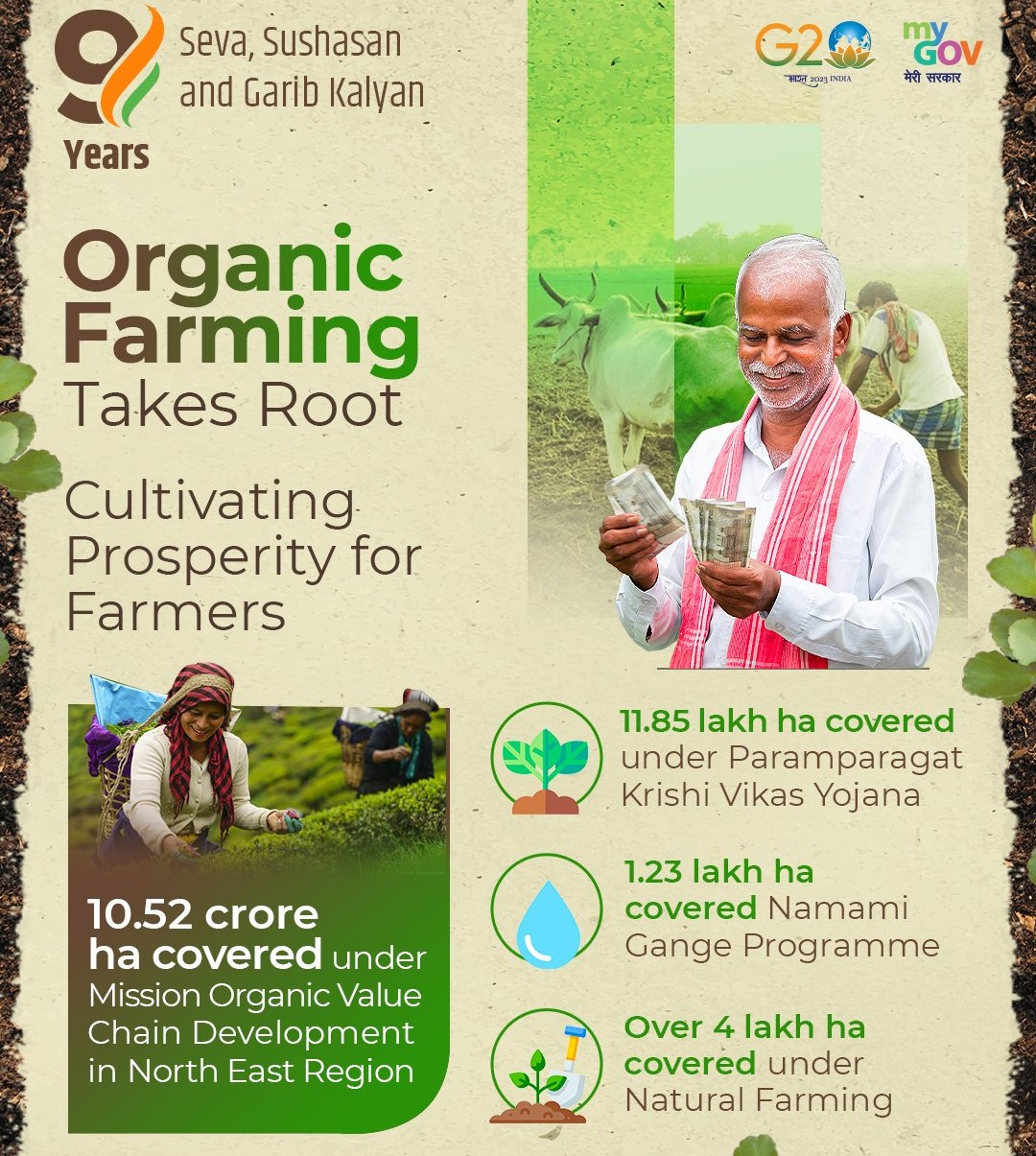
Organic farming is steadily emerging as a powerful solution for building a healthier, environmentally responsible, and economically stable agricultural system in India. With increasing awareness about safe food, soil conservation, and climate-friendly practices, the government has taken significant steps to encourage farmers to shift towards organic cultivation. The featured initiative highlights how structured programs and expert-led support are helping organic farming take firm root across the country.
Strengthening Farmers Through Organic Practices
The move towards organic farming is not just about eliminating chemical inputs; it is about restoring the natural balance of the soil and improving long-term productivity. Through dedicated awareness drives, training programs, and financial assistance, farmers are being guided to adopt natural farming techniques that enhance crop quality and reduce dependency on synthetic fertilizers and pesticides.
These initiatives aim to empower farmers with practical knowledge and sustainable solutions that improve both yield and soil health, ensuring long-term agricultural resilience.
Government Support Driving the Transition
To accelerate the adoption of organic farming, government-backed schemes have been introduced to provide structured support to farmers. These programs focus on capacity building, technical guidance, and implementation strategies that help farmers transition smoothly from conventional to organic methods.
By offering access to training, certification assistance, and organic inputs, these schemes are creating a strong foundation for eco-friendly agriculture while safeguarding farmer livelihoods.
Promoting Green Cultivation and Soil Health
One of the core objectives of organic farming promotion is to revive soil fertility. Continuous use of chemical inputs has degraded agricultural land over time, making it less productive. Organic practices such as composting, crop rotation, green manure, and bio-fertilizers help restore the natural nutrient balance, resulting in healthier crops and sustainable productivity.
This shift not only supports environmental conservation but also strengthens food safety standards for consumers.
Inspiring Participation and Awareness
Workshops, outreach programs, and awareness campaigns play a crucial role in spreading the message of organic farming. Farmers are encouraged to understand the benefits of eco-friendly cultivation through real-life demonstrations and expert guidance. This creates confidence and motivation to embrace sustainable agriculture as a viable and profitable alternative.
These initiatives also foster community participation, helping farmers connect, share experiences, and collectively grow within the organic farming ecosystem.
Building a Sustainable Agricultural Ecosystem
Organic farming contributes directly to reducing environmental pollution, conserving biodiversity, and improving water retention in soil. By promoting natural ecosystems and reducing chemical runoff, it ensures a healthier environment for future generations. It also strengthens rural economies by creating value-driven agricultural practices.
A Step Towards a Greener Tomorrow
The increasing focus on organic farming reflects India’s commitment to sustainable development and farmer welfare. By supporting farmers with knowledge, resources, and government-backed programs, organic farming is no longer just an alternative — it is becoming a foundational pillar of modern agriculture.
As organic cultivation continues to expand, it promises not only healthier produce but also stronger farmers, sustainable land use, and a greener future for the nation.